I need a care-home setting
Care homes
Residential accommodation where personal care is part of daily life; some homes also provide nursing care or specialist dementia support.
Also called: Residential care homes, Nursing homes (where nursing is provided)
Care registration, specialisms and fees vary by home — and regulation differs across the four UK nations.
- Reviewed
At a glance
- Who it may suit
- People who need personal care as part of daily life, or whose care needs can no longer be met at home.
- Accommodation
- Usually a furnished private room, often with an en-suite bathroom, plus shared lounges and dining rooms.
- Personal care
- Included as part of the placement — help with washing, dressing, medication and daily life.
- Nursing and specialisms
- Some homes are registered for nursing care or specialist dementia support; many are not. Always check the registration.
- Regulation
- Homes are inspected by the care regulator for their UK nation — CQC in England, Care Inspectorate in Scotland, CIW in Wales, RQIA in Northern Ireland.
- How to enquire
- Usually directly with the home or through a council care assessment; funding routes affect the process.
What care homes usually means
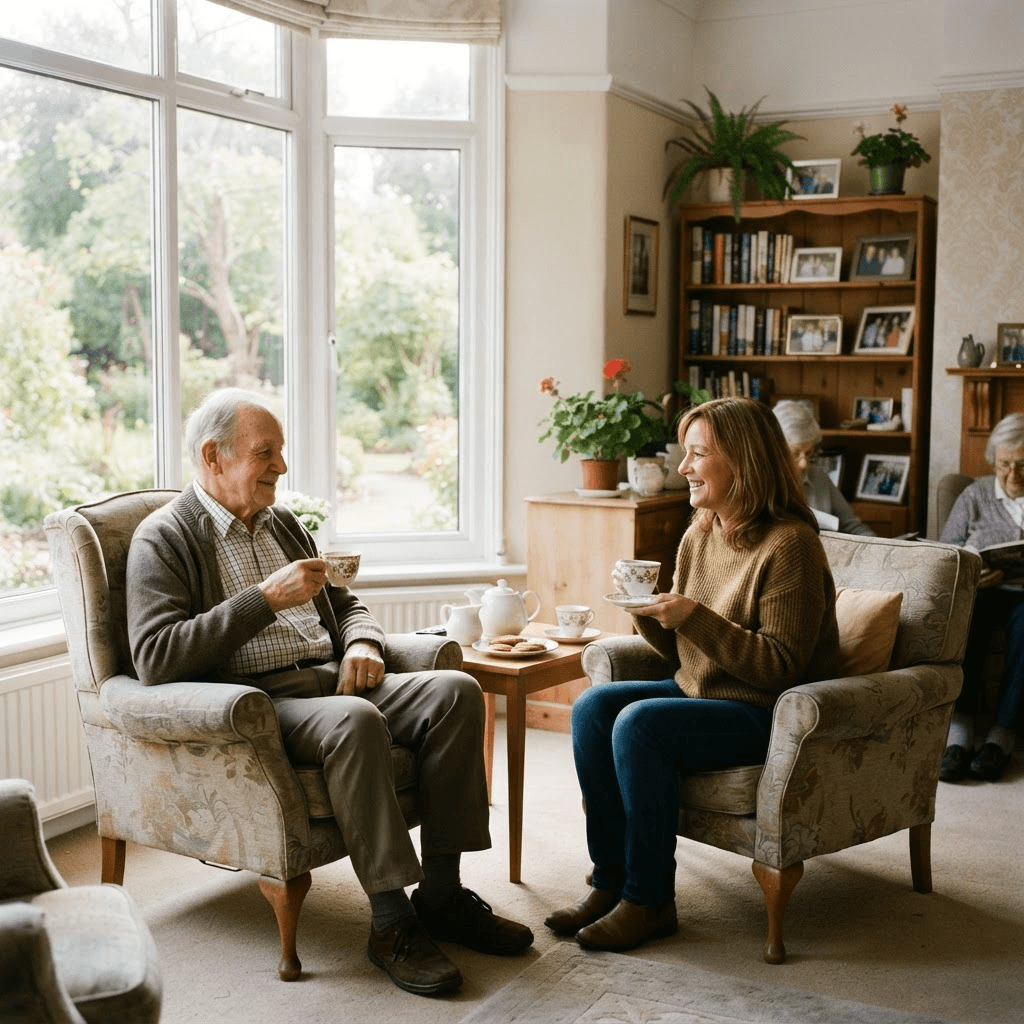
A care home provides accommodation and personal care together. Residents usually have their own furnished room — increasingly with an en-suite bathroom — and share lounges, dining rooms and gardens. Staff provide help with personal care as part of ordinary daily life, around the clock.
Homes differ in what they are registered to provide. A home registered for personal care (often called a residential care home) supports daily living; a home registered for nursing care (often called a nursing home) also has registered nurses on duty. Some homes hold specialist registrations for dementia care or other needs. The registration, not the marketing name, is what matters.
Every care home is inspected by the care regulator for its UK nation, and inspection reports are public. Fees vary widely by home, region and care need, and the funding system — council, NHS and self-funded routes — has different rules in each nation. A council care-needs assessment is usually the sensible first step.
Terms used here: personal care, nursing care, care assessment.
What to expect
Typical arrangements — the individual scheme or home always determines what is actually offered.
Your accommodation
- Usually a furnished private room, often en-suite; couples' rooms exist but are less common.
- Shared lounges, dining rooms and gardens are part of daily life.
- Personal belongings and some furniture can usually come with you.
- Check with the home what the room includes and what may be personalised.
Care and staffing
- Personal care — washing, dressing, medication — is part of the placement.
- Nursing care is available only in homes registered for it.
- Dementia and other specialisms require specific registration and trained staff.
- Check the home's current registration and latest inspection report.
Fees and funding
- Fees vary widely by region, home and level of care need.
- Council funding follows a care assessment and means test; thresholds differ by UK nation.
- NHS funding may cover nursing elements in registered homes.
- Check with the home and council the full current fee and funding position.
Is it likely to suit you?
There is no single right answer — these questions are meant to help you reflect, not to assess you.
- Do you need personal care built into daily life rather than arranged around it?
- Is nursing care or dementia support likely to be needed?
- Have you had, or requested, a council care-needs assessment?
- How would the placement be funded, now and if savings change?
- Which locations keep family and friends close enough to visit easily?
Often confused with
Care homes or extra-care housing?
Extra care keeps your own self-contained home with care available; a care home combines accommodation and care in one package.
The home
- Care homes
- Self-contained accessible flat with your own front door.
- Extra-care housing
- An accessible flat within a larger scheme staffed by an on-site care team, rented or owned.
Care and support
Personal care usually available on site when needed.
Care homes or close-care housing?
Close care is an independent home beside a care home; residents are not care-home residents unless they later move.
The home
- Care homes
- Independent bungalow or flat on or beside the care-home site.
- Close-care housing
- A flat or bungalow on or beside a care-home site, with services purchased from the home.
Care and support
Services purchased from the neighbouring home by arrangement.
Questions to ask providers
Worth asking about any scheme or home you are considering — print this page and take it with you.
What is the home registered to provide — personal care, nursing, dementia care?
Registration defines what the home can legally support.
What do the latest inspection reports say?
Regulator reports are public and current.
What are the current fees, and what do they include?
Extras such as hairdressing or outings are often charged separately.
How are council or NHS funding handled here?
Homes differ in the funding routes they accept.
What happens if care needs increase beyond the registration?
Some residents must move if needs exceed what the home may provide.
How are visits, meals and daily routines organised?
Daily life policies shape whether a home feels right.
Is there a trial stay or short-stay option?
Respite stays can test suitability before commitment.
Keep going
Choosing later-life housing: a practical guide
A practical guide to weighing up support, tenure and cost across the main housing types.
Related information and sources
Across the UK
Care-home regulation and funding differ across the four UK nations: CQC (England), Care Inspectorate (Scotland), Care Inspectorate Wales, and RQIA (Northern Ireland) each apply their own frameworks and means-test thresholds.
Sources and review
Reviewed by ShelterFind Editorial Team on . This explainer describes typical arrangements; details vary by scheme, provider and nation.