I want support nearby
Sheltered housing
Self-contained homes for older people, often with an alarm service and a scheme manager, designed to support independent living.
Also called: Sheltered accommodation, Warden-assisted housing
Services, tenure and eligibility vary by scheme.
- Reviewed
At a glance
- Who it may suit
- People who want their own home and the reassurance of an alarm service or a scheme manager nearby.
- Home arrangement
- Usually a self-contained flat or bungalow with your own front door, within a small scheme.
- Support usually available
- Often an emergency alarm service; many schemes have a scheme manager on site or visiting.
- Personal care
- Not usually included. Residents who need care generally arrange it separately, as they would at home.
- Typical tenure
- Most schemes are rented from a housing association or council; some are leasehold or shared ownership.
- Age or eligibility
- Commonly 55 or 60 and over, but the age rule and any local criteria vary by scheme.
What sheltered housing usually means
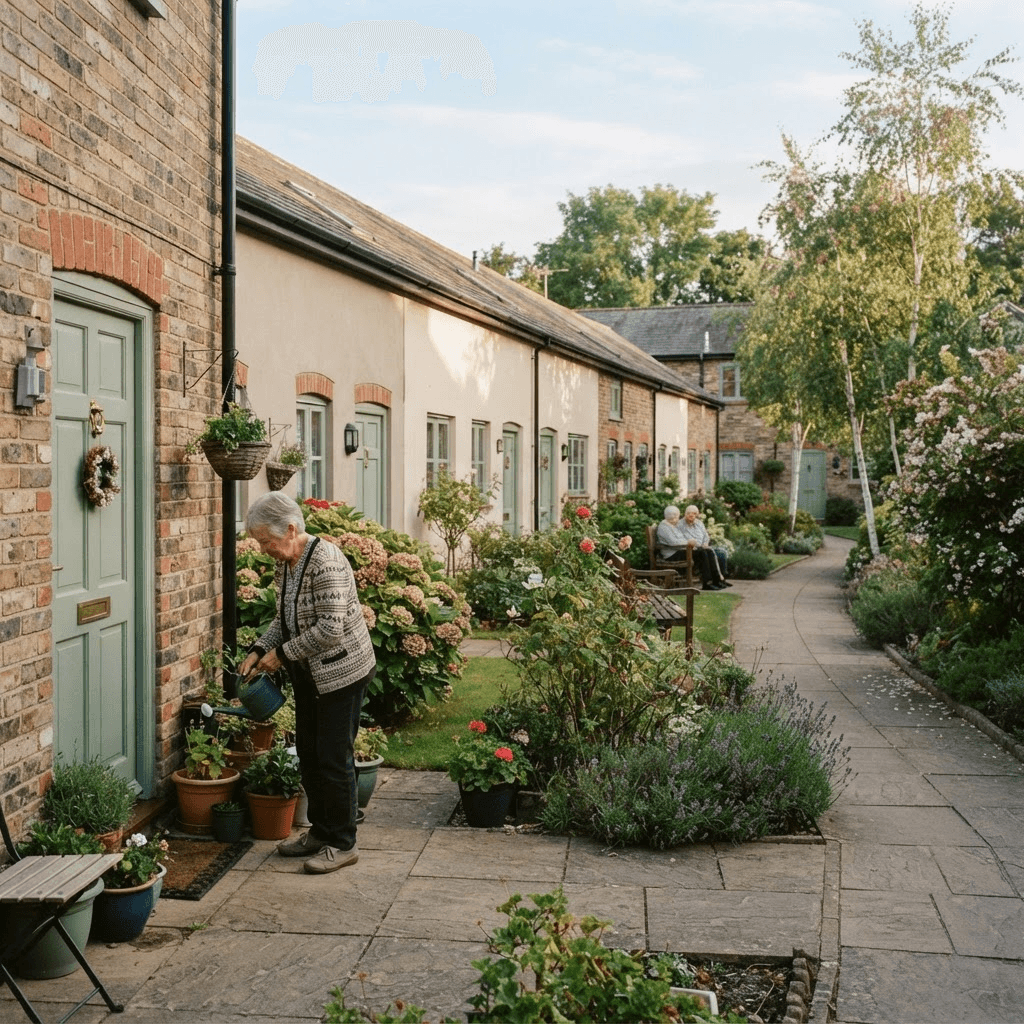
Sheltered housing usually means a group of self-contained homes — flats or bungalows — built for older people who live independently. You have your own front door, your own kitchen and bathroom, and your own tenancy or lease, in a scheme that is usually smaller and quieter than a general-needs estate.
Most schemes include an emergency alarm service you can use at any time, and many have a scheme manager (sometimes called a warden in older schemes) who is on site or visits regularly. The manager's role is usually to keep the scheme running and check on residents' wellbeing — not to provide personal care.
Communal spaces vary widely. Some schemes have a shared lounge, laundry and garden with regular social activity; others have few shared facilities. Personal care is not normally part of the arrangement: residents who come to need it usually arrange home care separately, exactly as they would in any other home.
The exact offer — services, charges, tenure and age rules — differs from scheme to scheme, so the details of the individual property always matter more than the label.
Terms used here: scheme manager, tenure, service charge.
What to expect
Typical arrangements — the individual scheme or home always determines what is actually offered.
Your home
- Usually a self-contained one or two bedroom flat or bungalow with your own front door.
- Schemes often include a shared lounge, garden or laundry, though facilities vary widely.
- Many schemes accept pets, but policies differ — check before applying.
- Check with the provider what is included in the individual home.
Support and care
- An emergency alarm service is usually part of the arrangement.
- A scheme manager is often on site or visiting, focused on wellbeing rather than care.
- Personal care is not normally included; residents usually arrange home care separately if needed.
- Check with the provider exactly what support is available and when.
Costs, tenure and eligibility
- Most sheltered homes are rented from housing associations or councils; some are leasehold.
- Expect rent or ground charges plus a service charge covering the alarm, manager and shared spaces.
- Age rules are commonly 55 or 60 and over; councils may apply local connection criteria.
- Check with the provider the current charges and eligibility rules for the scheme.
Is it likely to suit you?
There is no single right answer — these questions are meant to help you reflect, not to assess you.
- Do you want your own self-contained home?
- Would an alarm service or a scheme manager nearby provide useful reassurance?
- Do you need personal care now, or would you prefer to arrange it separately if needed later?
- Are you looking to rent, buy, or consider either?
- Which eligibility, accessibility and pet policies matter to you?
Often confused with
Sheltered housing or retirement housing?
Retirement housing is age-restricted housing without the built-in support role that sheltered schemes usually include.
The home
- Sheltered housing
- Self-contained flat or bungalow, usually bought leasehold or rented privately.
- Retirement housing
- A private flat or bungalow in an age-restricted development, most often owned leasehold.
Care and support
No built-in support; care arranged privately if needed.
Sheltered housing or extra-care housing?
Extra-care housing adds an on-site care team, so personal care can usually be arranged within the scheme itself.
The home
- Sheltered housing
- Self-contained accessible flat within a larger scheme.
- Extra-care housing
- An accessible flat within a larger scheme staffed by an on-site care team, rented or owned.
Care and support
Personal care usually available on site when needed.
Questions to ask providers
Worth asking about any scheme or home you are considering — print this page and take it with you.
What support is available, and at what times?
Scheme manager hours vary from full-time on site to occasional visits.
Is personal care included, available separately, or not provided?
Most sheltered schemes do not include care — how you would arrange it matters.
What are the tenure and current charges?
Rent, service and alarm charges differ by scheme and change over time.
What age or other eligibility rules apply?
Age limits, local connection rules and housing-need criteria vary.
Is the home suitable for your accessibility needs?
Not every sheltered home is step-free or adaptable.
What happens if your care needs change?
Some schemes can support changing needs; others may not.
Are pets allowed?
Pet policies vary between schemes and providers.
Sheltered housing currently listed
Approved listings of this type appear here as providers publish them. You can still search now — new homes are added regularly.
Search all sheltered housingKeep going
Choosing later-life housing: a practical guide
A practical guide to weighing up support, tenure and cost across the main housing types.
Related information and sources
Related reading
Sources and review
Reviewed by ShelterFind Editorial Team on . This explainer describes typical arrangements; details vary by scheme, provider and nation.